Duckpin Bowling's Big Moment: Impressive Revenue From a Small Footprint
BCM magazine explores the duckpin boom—big revenue from a small footprint—featuring Brunswick's Sync-integrated Duckpin solutions and their strong per-square-foot returns.

InterGame featured Brunswick's Duckpin Social in its June 2023 issue, in a story by Lee Wild. Here's a look at the piece.
Brunswick is one of the most recognizable names in bowling, and its vice president of product solutions, Brandon Meigs, told InterGame that the well-established duckpin game is the perfect attraction to lead in the fast-growing space of competitive socialization.
"The main premise is to provide various easily understood forms of entertainment with low barriers of use," Meigs says, pointing to attractions like beer pong, axe throwing, and pickleball that pair with bowling to create a destination drawing a wide audience.
Key takeaways from the article:
Read the full feature from InterGame here.




It fits the competitive socialization trend—easy-to-understand entertainment with low barriers to entry that pairs naturally with food, drinks, and other attractions. The smaller balls also remove the intimidation factor of heavy tenpin balls, so all guests can participate.
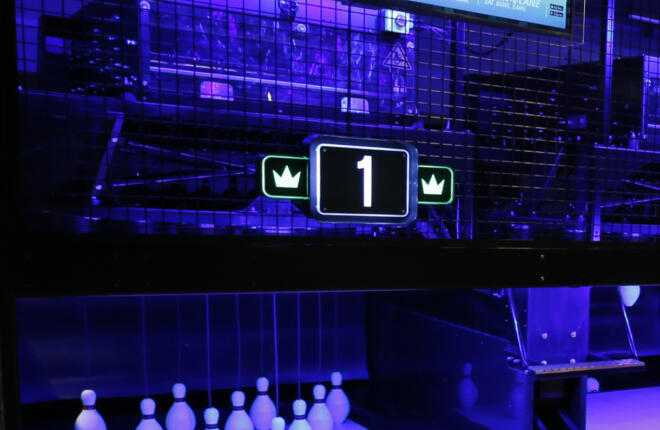
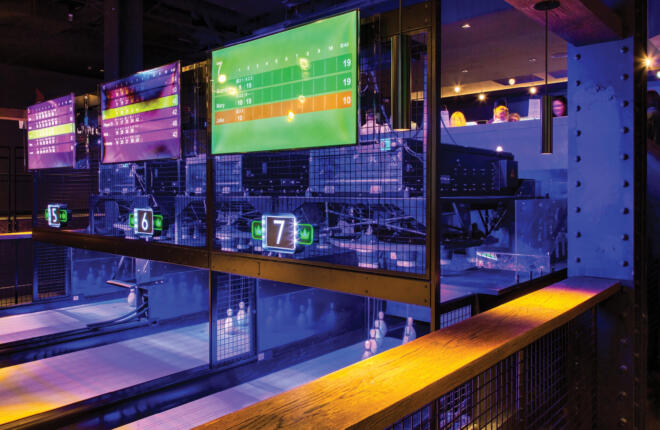
Just one third the space of a traditional tenpin lane, which opens bowling up to venues that couldn't previously accommodate it—particularly existing facilities where no new square footage is being added.
Because it occupies a third of the footprint, the duckpin game can theoretically accrue three times the ROI. Meigs notes that it generates impressive revenue per square foot on bowling alone, and the numbers get stronger when food and beverage revenue is factored in.
No. Meigs says traditional bowling remains the popular choice for new construction designed around bowling, especially large FEC models with 40,000–50,000 sq. ft or more, and for operators offering bowling as a sport. Business model and available space typically dictate which fits better.